How to Select the Right ERW Pipe for Your Infrastructure Project
- utkarshindia87
- Nov 5, 2025
- 3 min read
Know how to choose the right ERW pipes for infrastructure projects by checking quality, dimensions, standards, and selecting a trusted ERW pipe manufacturer.
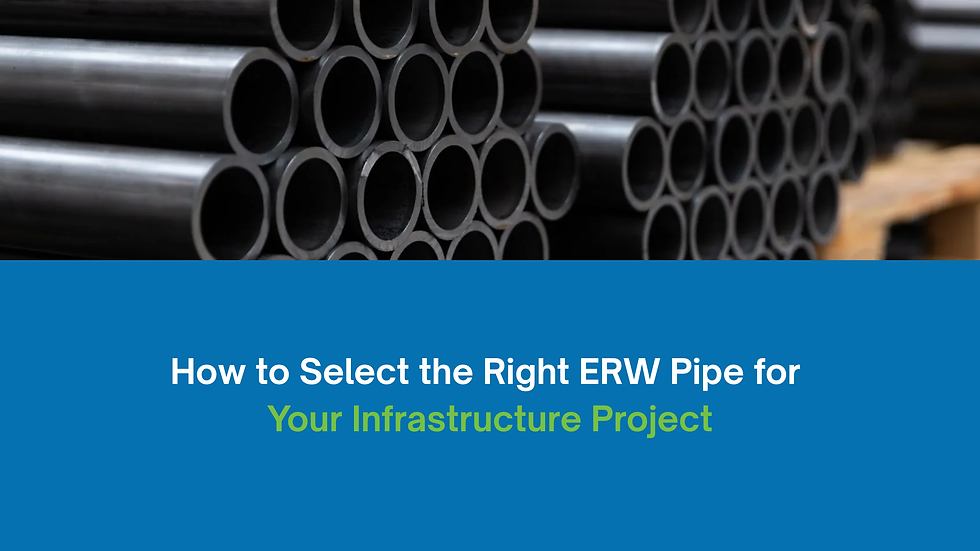
Choosing the right piping solution is one of the most essential steps in building a safe, efficient, and long-lasting infrastructure project. Whether you’re working on water pipelines, structural supports, engineering frameworks, or heavy-duty industrial systems, ERW pipes are among the most reliable options available today. Their strength, uniformity, and versatile applications make them a top choice for engineers, contractors, and project managers.
In this article, we break down the key considerations to help you select the best ERW pipes for your infrastructure project. From understanding manufacturing processes to evaluating technical specifications and selecting the right ERW Pipe Manufacturer, here’s everything you need to know.
What Makes ERW Pipes Suitable for Infrastructure?
ERW steel pipes are produced using the Electric Resistance Welding process, which creates a strong, consistent weld seam. This makes the pipes dependable, durable, and suitable for everything from low-pressure applications to heavy-load structural uses.
Strength and Durability
One of the biggest advantages of electric resistance welded pipes is their impressive structural integrity. The welding process ensures a seamless bond, allowing the pipes to withstand high pressure, vibrations, and environmental stress. This is especially important for critical infrastructure like bridges, industrial buildings, and water supply systems.
Cost-Effectiveness
Every project has a budget, and ERW pipes offer a practical balance between performance and affordability. Because they are produced in large quantities with consistent dimensions, they are cost-effective without compromising reliability. This makes them ideal for large-scale infrastructure projects that require hundreds or thousands of meters of piping.
Types of ERW Steel Pipes to Consider
Not all ERW pipes are the same. Choosing the right type depends on your project’s load, pressure, and environmental requirements.
Standard ERW Steel Pipes
These are suitable for:
Fencing
Water pipelines
Structural frames
General engineering tasks
Their versatility and ease of installation make them a popular choice for commercial and residential infrastructure.
Electric Resistance Welded Pipes for Heavy-Duty Use
High-strength ERW pipes are engineered for demanding environments such as:
Oil and gas transport
Industrial supports
Heavy construction
High-pressure systems
These pipes undergo advanced heat treatments and inspections, ensuring they deliver reliable performance even under extreme conditions.
Comparison Table: Standard vs. Heavy-Duty ERW Pipes
Feature | Standard ERW Pipes | Heavy-Duty ERW Pipes |
Strength Level | Medium | High |
Suitable For | Commercial & residential use | Industrial & high-pressure systems |
Cost | Lower | Higher |
Applications | Fencing, water supply, frames | Oil, gas, heavy structures |
Durability | Good | Excellent |
Key Factors to Check Before Buying
To make the right decision, evaluate these essential factors:
Material Grade and Quality
Always check the steel grade used in the pipe. High-quality grades offer: Better corrosion resistance
Higher pressure-handling capacity
Longer service life
Grades like ASTM A53, IS 1161, and API standards ensure that the steel meets global quality benchmarks.
Compliance With Industry Standards
Selecting pipes that comply with national and international standards ensures safety, reliability, and performance. Make sure the pipes align with:
ASTM standards
API guidelines
BIS/IS codes
Industry-specific technical certification
Pipes meeting these criteria deliver trustworthy performance for long-term infrastructure needs.
Pipe Dimensions and Wall Thickness
Choosing the correct diameter and thickness is crucial. Thicker pipes handle more pressure and stress, while thinner ones work well for standard applications.
Key considerations include:
Outside diameter
Wall thickness
Tolerance levels
Pressure rating
A mismatch in requirements can lead to early wear, leakage, or structural failure.
Weld Quality and Finish
A high-quality ERW pipe should have a smooth, clean weld seam without cracks or inconsistencies. The surface finish should be uniform, corrosion-resistant, and free from defects.
Choosing a Reliable ERW Pipe Manufacturer
Partnering with a trusted ERW Pipe Manufacturer ensures consistent quality and reliable service. A reputable manufacturer offers:
Advanced production technology
High-grade raw materials
Strict quality testing and inspection
Accurate dimensions and specifications
On-time delivery and strong customer support
Working with the right supplier reduces the risk of delays, structural issues, and project failures.
Conclusion
Selecting the right ERW pipe is not just a technical decision—it’s a foundation for building safe, durable, and efficient infrastructure. By understanding the differences between standard and heavy-duty ERW steel pipes, evaluating quality parameters, checking certifications, and choosing a reputable ERW Pipe Manufacturer, you can ensure long-lasting performance and reliability.
Remember, the right ERW pipes, ERW steel pipes, and electric resistance welded pipes will ultimately support the strength, safety, and success of your project for years to come.


Comments